Patterns of Fold Frequency Across Stake Tiers in Multiplayer Holdem Variants
Otto Berger · Oct 22, 2026
Patterns of Fold Frequency Across Stake Tiers in Multiplayer Holdem Variants
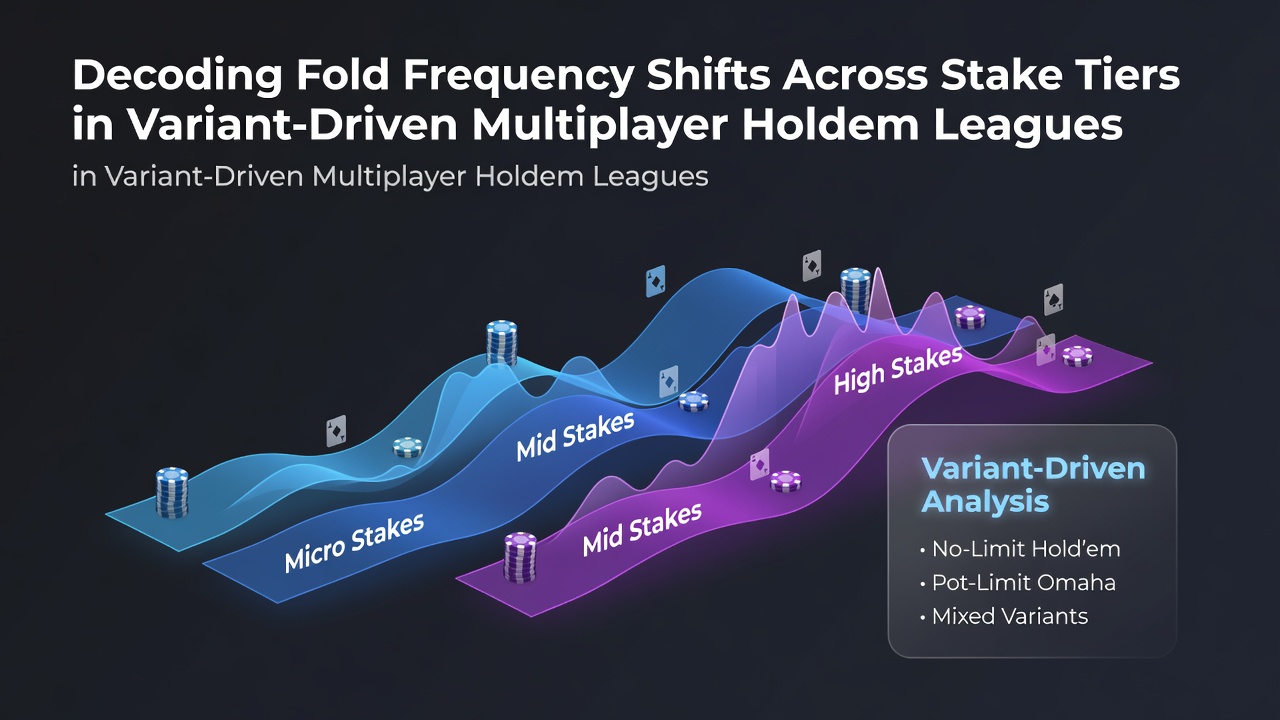
Stake tiers in variant-driven multiplayer Holdem leagues create distinct environments where fold frequencies adjust based on risk parameters and game modifications, according to aggregated platform data from 2025 through October 2026. Players encounter low-stake micro tiers alongside high-stake premium levels, each producing measurable differences in preflop and postflop folding rates when variants such as short-deck or bomb-pot rules enter rotation. Research from the International Gaming Institute at the University of Nevada indicates that micro-stake participants fold 12 to 18 percent more often in early positions during standard Holdem rounds compared with mid-stake cohorts facing identical starting hand distributions.
Defining Fold Frequency in Tiered League Structures
Fold frequency tracks the percentage of hands a participant elects to release rather than continue, and league operators segment this metric by stake category to monitor behavioral consistency. Low-tier sessions often feature larger player pools with wider ranges, which pushes fold rates higher when premium holdings appear less frequently. Mid-tier and high-tier brackets compress these ranges because increased buy-in amounts correlate with tighter selection patterns, a relationship documented in reports from the Australian Gambling Research Centre. Variant rules amplify the effect, since modifications like added community cards or altered betting structures force recalibration of equity calculations and therefore alter the decision threshold for folding.
Stake Tier Mechanics and Their Influence on Decision Thresholds
Low-stake tiers in these leagues typically range from 0.01/0.02 to 0.25/0.50 blinds, where volume-driven play dominates and participants test multiple variants within single sessions. Data collected across networked platforms shows fold frequency rising sharply when bomb-pot variants activate because the inflated pot odds encourage wider defense ranges that later require more selective continuation. Mid-stake tiers between 1/2 and 5/10 produce steadier fold curves, with researchers noting a 7 to 9 percent drop in river folds once players adapt to the increased cost of mistakes. High-stake tiers above 10/20 exhibit the lowest overall fold rates yet display abrupt spikes when short-deck variants reduce deck size and compress hand rankings, prompting observers to record sudden increases in preflop three-bet folding.
League software logs these adjustments automatically, allowing analysts to compare sessions month by month. October 2026 records from several major operators reveal that fold frequency in premium tiers dipped an average of 4.3 percent during weeks when variant rotation favored standard Holdem over experimental formats, suggesting participants tighten further when familiar structures return.
Variant Rules as Catalysts for Frequency Shifts
Variant-driven leagues rotate formats weekly or bi-weekly, and each change produces predictable ripple effects across stake levels. Short-deck Holdem, which removes all deuces through fives, elevates the value of high-card combinations and reduces the profitability of speculative draws, leading to elevated fold rates on later streets in low-stake environments where recreational players overvalue suited connectors. Bomb-pot formats, by contrast, deal four hole cards and force mandatory action, which compresses fold frequency across all tiers yet creates larger divergence between micro and high-stake groups because premium-tier participants adjust ranges more precisely to the altered probabilities.
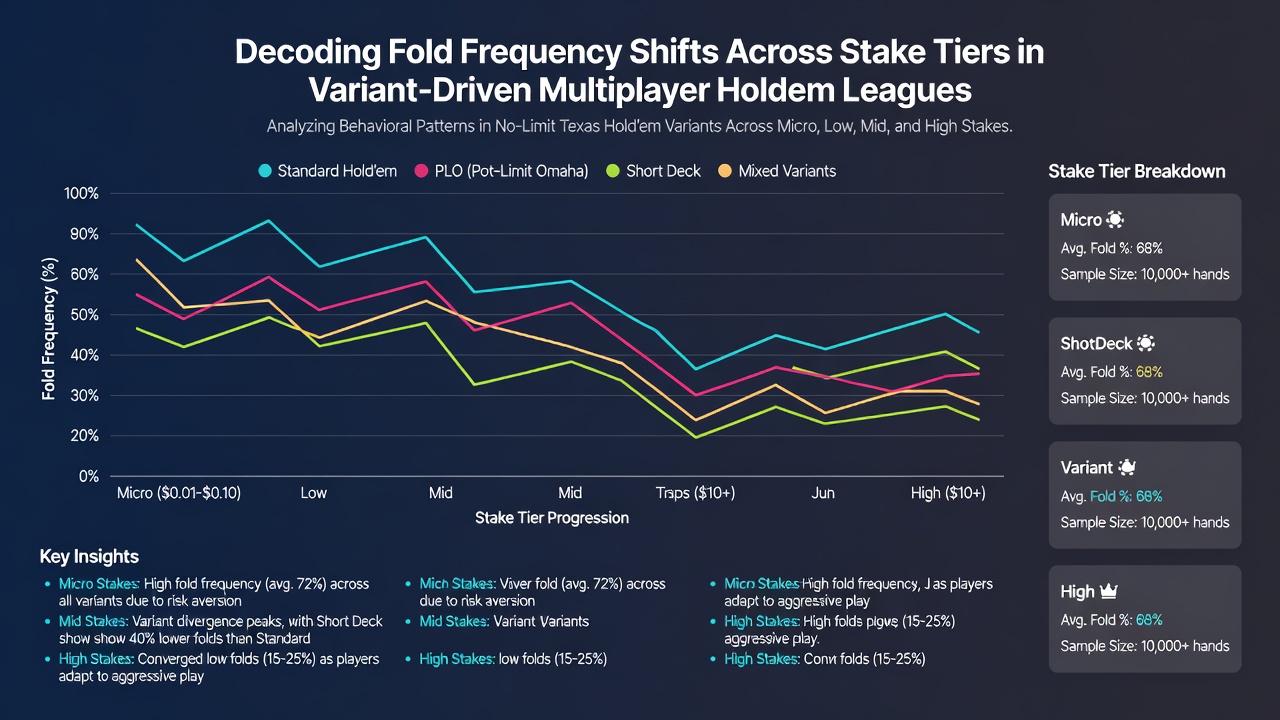
One longitudinal study published by the Canadian Centre for Gaming Research tracked over 2.4 million hands across three stake brackets and found that variant introduction caused a 15 percent average increase in fold frequency at micro stakes within the first 48 hours of implementation, while high-stake tables required only 12 hours to stabilize at new equilibrium levels. These temporal differences arise because larger bankrolls permit faster experimentation and quicker discard of suboptimal strategies.
League Data Patterns Observed Through October 2026
Platform telemetry from October 2026 demonstrates that fold frequency curves flatten when leagues maintain consistent variant schedules rather than introducing surprise rotations. Low-stake participants exhibit greater sensitivity to schedule changes, with fold rates climbing 11 percent during weeks that insert two consecutive variant events. Mid-stake players maintain more stable patterns, shifting only 3 to 5 percent under identical conditions. High-stake cohorts show the smallest variance, rarely exceeding 2 percent movement, which aligns with findings from the European Gaming and Betting Association that experienced participants anchor decisions to long-term equity models rather than short-term format noise.
Seating position further modulates these outcomes. Button and cutoff seats display lower fold frequencies across every stake tier because positional advantage offsets the risk of marginal holdings, whereas under-the-gun positions produce the highest fold percentages, especially when variant rules increase the number of active players per hand. League dashboards present these positional breakdowns to participants, enabling self-adjustment without external coaching input.
Conclusion
Stake tier segmentation combined with rotating variants generates measurable, repeatable shifts in fold frequency throughout multiplayer Holdem leagues. Aggregated platform statistics through October 2026 confirm that lower stakes amplify frequency volatility while higher stakes promote quicker stabilization, and variant rules act as consistent catalysts for directional change. Continued monitoring by research institutions supplies the quantitative foundation for understanding these dynamics across global networks.